otto's war room banner

otto's war room banner

Tuesday, January 31, 2006

FMLN's Schafik Jorge Handal, October 13/14, 1930 – January 24, 2006


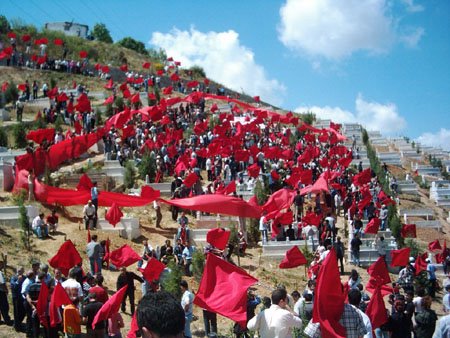
Schafik Jorge Handal, died recently, (October 13/14, 1930January 24, 2006). He was a guerrilla leader in the late 1970s and early 1980s, he was a member of the group that brought five opposition forces together to found the Farabundo Martí National Liberation Front (FMLN).
In his last few years the FMLN had given up on armed revolution and taken up the role as a political party. In 1997, he was elected to the Legislative Assembly, serving as the leader of the FMLN's party bloc in the legislature.
The following was posted at the site of the Movimiento de Izquierda Revolucionaria (MIR) de Chile:

COMUNICADO OFICIAL
Frente Farabundo Martí para la Liberación Nacional
FMLN
...Schafik Hándal ha sido, es y seguirá siendo un valor nacional, por su entrega a la lucha por la democracia, la justicia y el socialismo. Ejemplo de entereza moral, la verdad fue siempre su arma. Hombre incorruptible, de principios inquebrantables y a la vez, profundamente humano.La partida de Schafik deja un enorme vacío en El Salvador. El FMLN hace suyo el legado de valores, principios y el ejemplo que nos hereda Schafik. Elevamos ante el pueblo salvadoreño y el mundo nuestro inclaudicable compromiso de continuar luchando, con energía y determinación, por los ideales del compañero Schafik Jorge Hándal...(Leer Más)
25 de enero de 2006

Sunday, January 29, 2006

The Rev. Joe Wright – 10 years of being a major asshole in Wichita


According to The Wichita Eagle, January 22, 2006:

“We happened to notice the approach of an interesting anniversary: It was on Jan. 23, 1996, that the Rev. Joe Wright, senior pastor of Wichita’s Central Christian Church, delivered the prayer to the Kansas House that has been e-mailed and debated around the world. With lines such as “we have endorsed perversion and called it an alternative lifestyle,” “we have rewarded laziness and called it welfare,” and “we have killed our unborn and called it choice,” the prayer has become a battle cry for many in the culture wars.”


Yes we have been locked in a culture war and it has not been a nice civilized debate. It has come down to a fight to the finish where the stakes are high. For those of us who hold nothing but contempt for Wright and his fascist fundamentalist Christians, it has been a battle for survival. He has bashed all non-Christians and whittled away at their rights as fast and hard as he can.


Here’s an expression he may appreciate and it comes from his worst enemies.

"To keep you is no gain, to get rid of you no loss!" - Communist Party of Kampuchea, cadre idiom on the "New people" (city people).

Rev. Wright, we don’t need you and you will never be a loss to us.

Tuesday, January 24, 2006

Iran will be no pushover


Iran will be no pushover

The Communist Party (Maoist) of Afghanistan , which has already united to build a military resistance movement to the US occupation has had to thank the The Communist Party of Iran (MLM) for its help in forging such unity. But there are recent speculations that the US has plans to go into Iran. If they do, they may find that the opposition has had way more experience than the groups bogging us down presently in Iraq,

The Communist Party of Iran (MLM):

"has demonstrated a comradely internationalist spirit and made qualitative contributions throughout the process of uniting the MLM movement of Afghanistan. Our Congress greatly appreciates this contribution and we hope our joint struggle in the region further strengthens our relationship in the future.

The common ground that was established in the process of struggle further advanced the communist movement of Afghanistan. One of the important aspects of the unification was the joint resolutions issued by the organisations participating in the unity process.

The Unity Congress of the communist (MLM) movement of Afghanistan as the final step of the process to unite the MLM movement in a single party, that is, the Communist Party of Afghanistan (Maoist), was held by the Communist Party of Afghanistan, the Struggle Organisation for the Liberation of Afghanistan, and the Revolutionary Unity of Workers of Afghanistan.

The Congress began with the singing of the Internationale anthem. The participants engaged in an active struggle that culminated in a successful Congress. In adopting the Programme and the Constitution of the Party, as well as in electing the members of the leadership of the Party, they demonstrated a great spirit of internationalism. The report to the Congress was received and discussed by the Congress enthusiastically. The discussion of different sections of the Draft Programme and Constitution of the Party was marked by excellent struggle and a spirit of unity. The Programme and Constitution both were adopted by unanimous vote. In electing the leadership a high proletarian spirit was manifested by all the participant comrades.

Another strong point of the Congress was a message from the RIM Committee to the congress, which was received with great appreciation and enthusiasm. In response, the keynote speaker of the Congress reciprocated by expressing appreciation of the message. The Congress decided to deliver a comradely message in response to the RIM Committee's message.

The message to the Congress from the Communist Party of Iran (Marxist-Leninist-Maoist) demonstrated its internationalist spirit as well as its keen interest in uniting the Maoist movement of Afghanistan in a single communist party. The Congress will respond to the message, showing its great appreciation for the comradely endeavours of the Communist Party of Iran (Marxist-Leninist-Maoist).

In the unity process, the communist movement of Afghanistan was inspired by the advances of the Communist Party of Nepal (Maoist) on the path of people's war. In the midst of holding the Congress we learned that the People's War in Nepal has made new advances, and this heightened the enthusiasm of our Congress. The Congress salutes the Communist Party of Nepal (Maoist) and will send a message to this party.

The role of internationalist struggle of the Revolutionary Communist Party, USA in preparing revolution in the USA, as well as in opposing the war of aggression led by US imperialism specifically in Afghanistan, is crucial to the international communist movement and to the people's resistance movement world-wide. At the present time, as Afghanistan is directly occupied by the US and its allies, the unity between our two people's struggles is an important task. We salute the Revolutionary Communist Party, USA and hope their struggle continues to be heightened."

There is also the Mojahedin, Iran, an armed organization that formed to oppose the Mohammad Reza Shah Pahlavi regime

THE PEOPLE OF IRAN ALREADY HAVE EXPERIENCE FIGHTING INVADERS. THIS WILL NOT BE ANOTHER IRAQ!


Monday, January 23, 2006

ROE v. WADE/ the Fetus vs. women


Abortion opponents rallied in Washington today, to stop abortion. They don’t just oppose abortion on demand for those who use it as birth control, the want to remove all exceptions so that they, not doctors, not family, can decide that the life of a fetus is more important than that of a woman

According to The Wichita Eagle, Jan. 23, 2006:
"You have championed a cause that had defined our nation," said Deborah Kline speeking for her husband Attorney General Phill Kline. "Kansas is now leading our nation in the restoration of the meaning of life."
Bishop Michael Jackels, of Wichita, told the crowd that human life was created in God's own likeness and that it should be respected.
He said that when fetuses are not protected, everyone should be concerned. He said the same ethic that applies to the unborn could apply to everyone.
"None of us are safe," he said.

The women sure won’t be if these anti-abortionists get what they want.

Saturday, January 21, 2006

Bin Laden speaks again, Bush looks stupid


It’s hard to make Osama Bin Laden look like a good guy, but Prez. George Bush has just about done that. He has made us the “ugly Americans" of the Middle-east and even some local people are beginning to believe that the next attack on US soil will be an “earned one.”

From Choice Changes, Posted by: ilyana on, January 19, 2006:
"A tape that "sounds like" Osama Bin Laden was released today that says more attacks are going to executed on US soil... In our homes?! The article below claims "there has never been a fake tape released". excerpt quoting the voice in the tape:"It's not because of security measures. We are planning and you will see it inside your home when we are ready. It is better to fight the Muslims here on our land, but we are a nation that will not fall for tricks. I offer a cease-fire on basis of mutual respect, but you will not allow it because the arms manufacturers and warmongers will not allow it."Very strange wording. Remember that history shows an attack on our soil improves approval ratings for sitting presidents. Remember also that Bush is preparing for another "preemptive attack", this time on Iran."

Sunday, January 15, 2006

Iraq and Afghanistan’s violence spills over into Pakistan

President George Bush is escalating the war throughout the Middle-east. This latest incident is just one more example of how the conflict in Iraq and Afghanistan are spilling over boarders to the rest of the Middle-east.

According to ABC News, The Associated Press :
“DAMADOLA, Pakistan Jan 14, 2006 — Pakistan on Saturday condemned a purported CIA airstrike on a border village that officials said unsuccessfully targeted al-Qaida's second-in-command, and said it was protesting to the U.S. Embassy over the attack that killed at least 17 people.
Thousands of local tribesmen, chanting "God is Great," demonstrated against the attack, claiming the victims were local villagers without terrorist links and had never hosted Ayman al-Zawahri.
Two senior Pakistani officials told The Associated Press that the CIA acted on incorrect information in launching the attack early Friday in the northwestern village of Damadola, near the Afghan border.
Citing unidentified American intelligence officials, U.S. news networks reported that CIA-operated Predator drone aircraft carried out the missile strike because al-Zawahri, Osama bin Laden's top lieutenant, was thought to be at a compound in the village or about to arrive.”
How do the drones make sure these people are by themselves and not with someone’s family and children? They are unmanned. For that answer we need to ask Bush.

Pakistani tribal villagers view damage caused by airstrikes in the northwestern village of Damadola, near the Afghan border in Pakistan, where 17 people killed, Saturday, Jan 14, 2006. Villagers whose homes were destroyed in a U.S airstrike targeting al-Qaida's number 2 Ayman al-Zawahri denied that he was ever there, as thousands marched in three separate protests against the attack. One mob set fire to the office of a U.S.-funded aid group. (AP Photo/Mohammad Zubair)

Thursday, January 12, 2006

Dr. Martin Luther King, Jr’s day is coming soon


Dr. Martin Luther King, Jr's birthday is on the same day as mine. Maybe that’s a coincidence. One thing I do know is that King proved you could be both non-violent and a non-coward. His people stood up to water cannons, attack dogs and club wielding cops. But they marched for civil-rights and won. They didn’t end racism in Amerikkka, but hey did bring about the voting rights act. Others, such as Malcolm X and the Black Panthers also did their part to promote the rights of Afro-Americans. But many people agree it started with M.L. King. Stokely Carmichael, who changed his name to Kwame Ture, was inspired by King and went on to join the Black Panthers. On 16th June, he made his famous Black Power speech. Carmichael called for "black people in this country to unite, to recognize their heritage, and to build a sense of community". He also advocated that African Americans should form and lead their own organizations and urged a complete rejection of the values of American society.
The M. L. King "I Have A Dream"Speech, and
The King Center.

Monday, January 09, 2006

You can still get my book: "Memoirs of a Drugged-Up, Sex-Crazed Yippie"


Don’t forget to buy my book. For a look, at a fine review, or a list of places to get the book click here.

Saturday, January 07, 2006

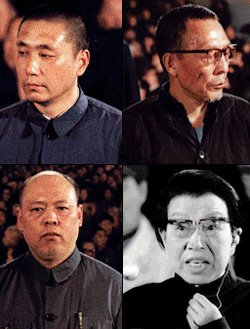
Last member of the Gang of Four, Yao Wenyan ( 姚文元), died

According to Wikipedia, Yao Wenyan ( 姚文元), the last living member of the Gang of Four died from diabetes on 23, 2005, at age 74. The Gang of Four were the top leaders of the left-wing faction of the Communist Party of China. That faction was crushed by the emerging right-wing faction under the control of Deng Xiaoping ( 邓小平).

From Answers.com:
“In 1981, the four deposed leaders were subjected to a show trial and convicted of anti-party activities. During the trial, Jiang Qing ( 江青) in particular was extremely defiant, to the point of being hysterical. Zhang Chunqiao ( 张春桥) refused to admit any wrong as well. (Moise Modern China: A History 2nd Edition) Yao Wenyan, and Wang Hongwen (王洪文 ) expressed repentance and confessed their crimes. Jiang Qing and Zhang Chunqiao received death sentences that were later commuted to life imprisonment, while Yao Wenyuan and Wang Hongwen were given twenty years imprisonment. While their imprisonment was not harsh, they were all released later. Jiang Qing would later commit suicide.”

Wichitans beat back the religious right

Enough citizens of Wichita called up KSNW, Channel 3 and complained about the censorship of "The Book of Daniel" that the station had to reverse its decision and air the show.
According to The Wichita Eagle, Jan. 07, 2006:
“Saying that it had received hundreds of calls and e-mails protesting its decision to take "The Book of Daniel" off the air, KSNW, Channel 3, changed its mind and Friday night ran the new show after all.”
Also: “But on Friday, after the station received another flood of calls and e-mails protesting the cancellation, it reinstated the show.
KSNW programmer Betty Erickson, who estimated the counter-protests "in the hundreds," said the reprieve was only for the two-hour pilot episode.”
A campaign against the show buy local fundamentalist churches resulted in the station deciding not to air the show. Some local Christian fascist fundamentalists said it would be offensive. Few had seen the show and their main complaint was that ‘Jesus or god seemed too human to them.’
I didn’t get to watch the whole show, but I seriously doubt if most Christians were upset by it or offended in any way.
We beat back the local fascists.

Friday, January 06, 2006

When religious right whackos reared their ugly heads, KSNW TV turned tail and fled – censorship won out

We here in Wichita, Kansas, will not get to see "The Book of Daniel" -- a program scheduled to premiere tonight. KSNW Channel 3 claimed, in The Wichita Eagle, Jan. 06, 2006, that they received hundreds of complains that the TV show was “offensive to Christians.”
Most of these Christians have not seen the show, only heard about it. These are probably the same fascists that called local retail stores, during the holidays, to threaten a boycott if the weren’t greeted with “Merry Christmas.” These fascist Christians want to control all aspects of our lives, from how we celebrate our private holidays to what we see on TV.
The show they oppose is about a minister with a family and many of today’s common problems. That was just a little too much for the fanatics that never want to see a Christian suffer any wrong action.
According to the Eagle:
Station general manager Shawn Oswald said Thursday that the station received more than 300 e-mails and phone calls from viewers opposed to the show.
"Over the past several days KSN has been contacted by viewers and area religious leaders expressing concerns over the content of this program," the station said in a news release. "As broadcasters using public airwaves and leaders in the community, we don't believe it's in the best interests of our community to air a program that a large number of viewers find deeply offensive."
In "The Book of Daniel," Aidan Quinn portrays the Rev. Daniel Webster, an Episcopalian minister. According to the show's description on the NBC Web site, Daniel "struggles to be a good husband, father and minister, while trying to control a nagging addiction to prescription painkillers, and an often rocky relationship with the church hierarchy."
The (Ir)Rev. Terry Fox, pastor of Immanuel Baptist Church and one of the worst of the religious fascist leaders who contacted the station, was pleased with the decision.

"I think (the show's) content is very offensive to most of the people in the country, and especially to people in Kansas," he said. "And I think it says that the local station truly is listening to the majority of people and I think the people really appreciate it."
Well, not everyone agrees. Most of us would like to decide for ourselves what to watch. According the Eagle, other church leaders disagreed with Fox also.
The Rev. Kate Moorehead, rector of St. James Episcopal Church in east Wichita, said she was looking forward to the show. She called the decision not to air it a form of censorship.
"People should understand it as fiction and as a form of art," she said. "And they should be able to judge for themselves whether they want to watch it or not."
The Rev. William James Wood, rector of St. John's Episcopal Church in downtown Wichita, said he wasn't concerned about the show's portrayal of religious leaders and their families.
"I wouldn't get up in arms about that," he said. "This is fiction."
A representative from the American Family Association (another front for religious fundamentalists) saw a special viewing of the show on Tuesday and described it as an attack on Christianity, said Randy Sharp, its director of special projects.
Among the group's criticisms is that the show portrays Jesus -- who appears and speaks to the minister -- as a "good ol' boy, nonchalant, happy-go-lucky kind of guy," Sharp said.
"It's not a true representation of Jesus Christ," he said.
It’s funny how these people seem experts on a man who died 2,000 years ago, as if they knew him personally. They have not tolerance for those who disagree with their version of Jesus and play the same role in Kansas as the Rev. Fred Phelps and the Ku Klux Klan.


Ku Klux Klan


American Nazis in the news; a Dateline NBC report shows a Neo-Nazi rally in front of Capitol in Washington D.C., 2004.
Post Script: afternoon:
At the very last minute KSNW Channel 3 reversed its decision and decided to air the program after all.

Wednesday, January 04, 2006

Nepal Maoist denounce comparisons to Khmer Rouge


Maoist in Nepal and their allies have denounced attempts to associate them with the Khmer Rouge. The right routinely tries to make such leftist movements appear as if they are following the same path and even call such groups “supporters of Pol Pot.”

Maoists have rejected that comment and the comparison. Here are some excerpts from Dissent Voice.

A “Terrific Threat” to Regional Stability
Jefferson, Mao, and the Revolution in Nepal
by Gary Leupp, April 18, 2005

Similar language was used by the U.S. ambassador to South Vietnam in relation to the National Liberation Front (“Vietcong”) in the early 1960s, when the region affected was Southeast rather than South Asia. But (U.S. ambassador to Nepal James Francis) Moriarty doesn’t compare Nepal’s Maoists to the NLF. Nor does he more than subliminally suggest associations with 9-11, Osama bin Laden and Saddam Hussein. Instead he conflates the Communist Party of Nepal (Maoist) with those archfiends of the Cold War era, the deeply anti-Vietnamese Khmer Rouge. The Maoists, Moriarty asserts, could turn Nepal into a “poor man’s Cambodia.” This analogy is significant, since many attacks on Maoists have sought to link them to the group that ruled Cambodia from April 1975 to January 1979. For example, the Federation of American Scientists (FAS) used to publish a “Sendero File” edited by Michael L. Smith, which damned the bourgeoning Maoist movement in Peru, routinely comparing it to the “Maoist” Khmer Rouge.

Using the Khmer Rouge to Attack Maoists

But this association between the Khmer Rouge and Maoism, originally made by the Soviets, is in fact rejected by Maoists themselves. The Revolutionary Internationalist Movement (the “embryonic center of the world’s Maoists” of which the Nepalese party is a member) indeed calls it “a deliberate effort to slander Maoism.” RIM describes the Khmer Rouge as “more a small circle than a party” that operated through a secretive body with an undisclosed leadership simply called “the Organization.” It denounces the Khmer Rouge for indiscriminate and widespread torture, economic disasters such as the abolition of money and proclamation of an immediately classless society, and general failure to understand socialism in the Marxian sense. It notes that the Khmer Rouge never called themselves Maoists, and indeed stated “it is better to learn nothing from foreign experience.” They made use of the monarchy surrounded by Theravada Buddhist traditions, promoted a ferocious nationalism, indulged in fantasies about recreating the glory days of the ancient Khmer Empire, and practiced a curious mix of doctrines that Philip Short, who has written biographies of both Mao Zedong and Pol Pot, declares should not be confused with Maoism. The differences, in Short’s interpretation, result largely from cultural context: “Whereas Mao was the product of an intensely rational, literate society, with highly developed traditions of philosophical debate, [the Khmer Rouge’s] cultural heritage was irrational, oral, guided by Theravada transcendentalism and by k’ruu, spirit-masters, whose truths sprang not from analysis but from illumination… They never once…carried out any social investigation of the social conditions in which that revolution was to come.” (“Investigation of social conditions” is fundamental to Mao’s thought.) “The contrast with Maoist China could hardly be greater,” concludes Short, a former BBC correspondent with no special pro-Mao agenda.

Short describes the one meeting between Mao and Pol Pot in Beijing soon after the Khmer Rouge victory in 1975. The Khmer Rouge had already evacuated Phnom Penh, set the population to rice production, and indicated its intention to immediately construct an ideal classless society. Mao diplomatically chided the Khmer leader, who had just arrived from talks in Hanoi: “[C]ertainly you have made mistakes. So rectify yourselves: do rectification!” Alluding to his visitor’s intention to eliminate class distinctions overnight, he noted that in China after many years of revolution, “Salaries are not equal. We have a slogan of equality---but we don’t carry it out. How many years will it take to change that? Until we become communist? …[T]his matter is not clear.” For Mao, the construction of socialism itself would require a very long period of arduous struggle, with the possibility of capitalist restoration seriously real at every step. Throughout the socialist period, there will be class division and class struggle. Thus for him the Cambodian experiment must have looked very dubious.

The Khmer Rouge crazies in fact were a unique phenomenon, not a product of any sort of Marxism so much as the product of saturation bombing that had destroyed the nation’s agricultural infrastructure, killed off 75% of its draft animals, displaced millions and thrown the culture completely off-balance. To this devastation we might add some of the cultural features Short finds relevant. In any case, from a certain anticommunist perspective, had the Khmer Rouge not existed in 1975 they would have had to be invented---if only to validate the longstanding prediction that a communist victory in Indochina would somehow produce a bloodbath. This just didn’t happen in Vietnam or Laos. But the Cambodian “holocaust” could be used to partly rationalize the carnage of the broadened Vietnam conflict that had killed about three million people, and to justify ongoing anticommunist counterinsurgency efforts around the world. (Meanwhile the horrific loss of life attributed to the Khmer Rouge could obscure that inflicted by U.S. bombing and related issues such as famine. One rarely sees a breakdown of casualties from 1970 to 1979 distinguishing the latter from the former, and of course the victims figure itself ranges significantly between 700,000 and two million.)


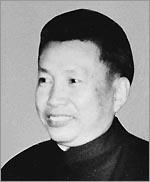
Pol Pot

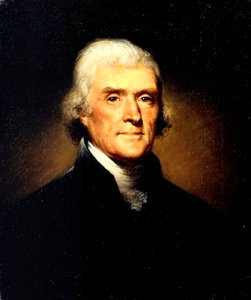
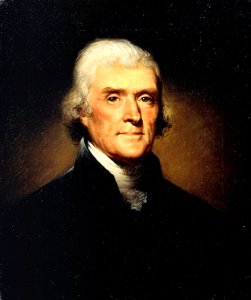
What Would Thomas Jefferson do?


Leupp also compares Nepal’s revolutionaries to Thomas Jefferson:

To his death in 1826 Jefferson upheld the French Revolution.

Some might find in Jefferson callous disregard for human suffering, and hypocrisy in any talk of freedom by a Virginia slave-owner. But I see Jefferson as a humanist, about as sensitive and thoughtful a man as you might find among his class during his time. He was merely coupling a passionate commitment to a better world with a realistic understanding of what deeds flawed human beings might perform in its pursuit: “……rather than [the Revolution] should have failed, I would have seen half the earth desolated. Were there but an Adam and an Eve left in every country, and left free, it would be better than it now is.” Better a less populated world that is free, than a world populously unfree. Better revolution replete with errors and crimes than no revolution at all.

“The Oppressed Should Rebel”

What would Jefferson think of the revolutionaries of today, the serious, violent, bloody revolutionaries such as the Maoists in Nepal charged with the slaughter of innocents, vilified in the mainstream press and even in some of the alternative press? We can only speculate on the basis of his writings. In his “Notes on Religion” written in 1776, a Jacobin Jefferson wrote, “The oppressed should rebel, and they will continue to rebel and raise disturbance until their civil rights are fully restored to them and all partial distinctions, exclusions and incapacitations are removed.” His reference to restoration reflects the Enlightenment Deist belief that “Nature’s Law and Nature’s God” gives human beings rights at birth that governments sometimes take away. But he’s basically saying what Mao Zedong did three centuries later: “It’s right to rebel.” Mao declared “Revolution is not a dinner party.” Jefferson in 1790 noted, “We are not to expect to be translated from despotism to liberty in a feather-bed.”

When you decide that it’s necessary to violently destroy a state apparatus and build something else in its place, you’re probably, in Jefferson’s words, going to make errors and even commit crimes. Errors and crimes are always regrettable. But those committed by the oppressed seldom rival those committed by the oppressors. Today a single hyperpower, a law unto itself, violates the UN Charter, the Geneva Conventions and its own Constitution, and kills tens of thousands of civilians in order to establish an empire. It refuses to allow the World Court to try any of its citizens, and by its arbitrary “terrorist” designations targets many who really do challenge despotism and seek liberty.

About 11,000 people (fewer than have died at the hands of U.S. forces in either Afghanistan or Iraq since those countries were invaded) have died for reasons connected to the People’s War since the war began in Nepal in 1996. Many fault the Maoists for all the casualties, although the great majority of those slain have by all accounts been Maoists and civilians perceived as Maoist supporters by the security forces (Nepal Assessment 2003). What would Jefferson think of this attribution? Perhaps he would say, “We American patriots plus our German mercenaries lost over 8,000 in action in our Revolutionary War, plus 20,000 civilians dead, and killed hundreds of redcoats. Were all those deaths the fault of our rebellion, or the fault of the government that through its injustice impelled us to the separation? To a new sort of regime only possible to create through force of arms?”

What would that other eloquent voice of the American Revolution, Thomas Paine say? Paine, who denounced Edmund Burke’s “horrid paintings” of the French Revolution, and despite his own imprisonment for a time by the Jacobins (an example of error and excess) was always a great friend of the French Revolution, might say: “The rebellion in Nepal is a revolt in favor of Reason. It makes no sense for 72% of its people to live below the poverty line, many in conditions resembling medieval European feudalism. It makes no sense for the government to neglect the population and present the king as the incarnation of a god. It makes no sense for 60% of the development budget to come from abroad, or for the country to so lack job opportunities that 50,000 Nepali women have to work as prostitutes in Mumbai, India -- half the city’s total. It makes no sense for infant mortality to be 70 in 1000 because there’s just one doctor per 25,000 people, or for longevity to average 59 years, or for literacy to stand at 45% with only a third of girls getting any education. The revolution will quite likely change all this. The world is my country, all men my brothers, all women my sisters. So I reject the horrid depictions of it and yes, I support the truly terrific revolution in Nepal.”

Gary Leupp is a Professor of History, and Adjunct Professor of Comparative Religion, at Tufts University and author of numerous works on Japanese history. He can be reached at: gleupp@granite.tufts.edu.

Monday, January 02, 2006

Progress continues in Nepal

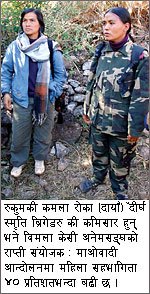
The Communist Party of Nepal (Maoist) has made an agreement with the other political parties of Nepal to form parliamentary democracy. The idea it to fully remove the monarchy and its influence from Nepal’s politics. Whether this will work any better than the Sandinista government under Daniel Ortega, only time will tell. They are taking a chance by holding fair elections. But they have nearly won a civil war so they must know what they are doing.

The following is from:


12/22/05, RED RPG <http://us.f305.mail.yahoo.com/ym/Compose?To=peoples_war@yahoo.co.uk> wrote:
Maoist Information Bulletin- 10
(Occasional Bulletin of Communist Party of Nepal (Maoist)


SHORTS NOTES ON 12 POINT UNDERSTANDING
While Communist Party of Nepal (Maoist) has historically concluded the plenum of Central Committee, the glorious political step forward has held in Nepal. CPN (Maoist) and seven parliamentary parties have reached in some understanding for fight against old fierce autocratic regime and establishing full democracy and peaceful republic of Nepal. It is a great achievement for new political system in Nepal. The long struggle between absolute monarchy and democracy in Nepal has now reached in a very momentous and new turn.

Maoist revolutionaries and parliamentary parties are agreed on implementing the concept of absolute democracy through a forward-looking restructuring of the state has become an inevitable need to solve the problems related to class, caste, gender, region etc of all sectors including political, economic, social and cultural, bringing autocratic monarchy to an end and establishing absolute democracy. The 12 points understanding is a devastating blow to old regime Gynendra and his butcher company. It is breaking the existing political confusion and darkness, has provided people a torch in their hand and it will go on blazing till the autocracy turns into ash.

Chairman Prachanda assured that it represents a preliminary political step but a step of far-reaching significance towards the direction of building up a broad democratic front against autocratic feudalism in the country. It is a historical success of flexible tactic, which has concluded by recent CC plenum.

The understanding reflects some important achievements: the parliamentary parties have significantly signed up on against autocratic feudalism in the country by building up a broad democratic front. They are agreeing to establish democratic system through the election of constitution assembly and transfer state power completely to the people. In understandings no 2 "The seven agitating parties are fully committed to the fact that only by establishing absolute democracy through the restoration of the Parliament with the force of agitation, forming an all-party government with complete authority, holding elections to a constituent assembly through dialogue and understanding with the Maoists, can the existing conflict in the country be resolved and sovereignty and state power completely transferred to the people. It is the view and commitment of the CPN (Maoist) that the above mentioned goal can be achieved by holding a national political conference of the agitating democratic forces, and through its decision, forming an interim government to hold constituent assembly elections. An understanding has been reached between the agitating seven parties and the CPN (Maoist) to continue dialogue on this procedural work-list and find a common understanding. It has been agreed that the force of people's movement is the only alternative to achieve this."
Similarly, parties and Maoist revolutionaries are also harmonizing as that "the country has demanded the establishment of permanent peace along with a positive solution to the armed conflict. Therefore, we are committed to ending autocratic monarchy and the existing armed conflict, and establishing permanent peace in the country through constituent assembly elections and forward-looking political outlet. In this very context, an understanding has been reached to keep, during the holding of constituent assembly elections after ending autocratic monarchy, the armed Maoist force and the royal army under the supervision of the United Nations or any other reliable international supervision, to conclude the elections in a free and fair manner and accept the result of the elections. We expect reliable international mediation even during the dialogue process."