
otto's war room banner

Thursday, December 29, 2005

Tuesday, December 27, 2005
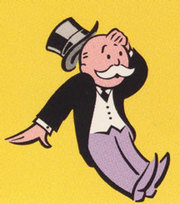
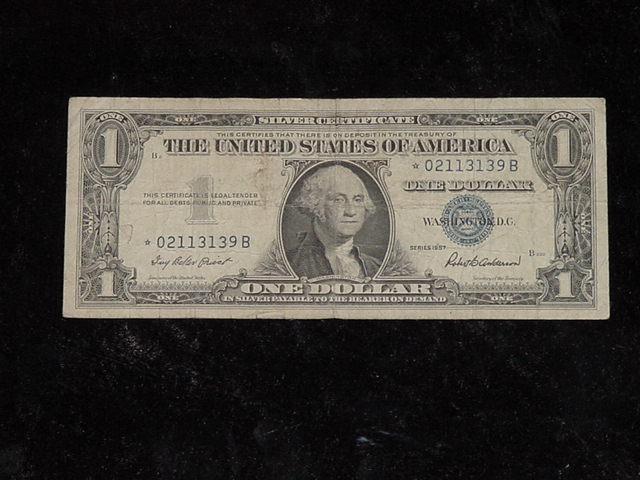
Students: Pay more, get less
According to The Wichita Eagle, Dec. 25, 2005:
“College students and their families will pay higher interest rates on their school loans if Congress approves a deficit-reduction bill that contains the largest cuts in history to the federal student loan program.
The bill would immediately raise the interest rates charged to students by 1.5 percentage points - an increase of roughly 28 percent - and mandate a smaller boost in a loan program used by parents. However, experts say the majority of the cuts will affect private lenders who get government subsidies, and not families struggling to pay for college.
"In an ideal world, I don't think that anyone who wants greater support for higher education would say, `This is the bill,''' said Jim Boyle, president of College Parents of America, a parents-advocacy group based in Washington. "But it's a lot better than it could have been."
Best we can do? That’s like saying “I’ll burn only half your house down. That’s the best I can do.”
With help like that, who needs enemies?
Sunday, December 25, 2005
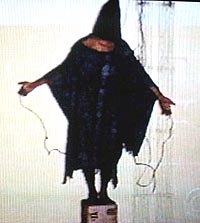
Peace on Earth, Good will towards Men
Peace on Earth, Good will towards men!
Peace on Earth, Good will towards men!
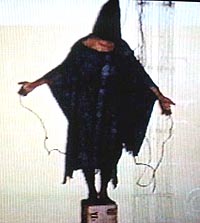

Peace on Earth, Good will towards men!

Friday, December 23, 2005
On the loss of Richard Williams, member of the Ohio 7
Richard Williams, one of the Ohio 7, died Dec. 7, of liver failure. He was 58. He has been in captivity since 1984 for the bombing of an army recruiting station. No one was injured or hurt in the blast. Williams was a life-long socialist and anti-imperialist.
As a young man, Williams was inspired by Che Guevara and wanted his whole life to be a true example of proletarian internationalism.
As for the other members of the Ohio 7, there is no mercy, no forgiveness and no justice. Jaan Laaman, another member of the group, will soon be sent to a federal prison where he will serve out another 53 years. He also has been in prison since 1984. He is trying to fight the federal sentence in court.
So thank you federal government of the United States for:
1. A lack of any mercy on those who have apposed you.
2. A lack of any sense of fair play or decency.
3. A lack of forgiveness of anyone who had the audacity to stand against your government.
4. As with the Roman Emperors, you are all powerful, vengeful and just plain cruel. But that is how a tyrant stays in power, so I will try to understand.
As a young man, Williams was inspired by Che Guevara and wanted his whole life to be a true example of proletarian internationalism.
As for the other members of the Ohio 7, there is no mercy, no forgiveness and no justice. Jaan Laaman, another member of the group, will soon be sent to a federal prison where he will serve out another 53 years. He also has been in prison since 1984. He is trying to fight the federal sentence in court.
So thank you federal government of the United States for:
1. A lack of any mercy on those who have apposed you.
2. A lack of any sense of fair play or decency.
3. A lack of forgiveness of anyone who had the audacity to stand against your government.
4. As with the Roman Emperors, you are all powerful, vengeful and just plain cruel. But that is how a tyrant stays in power, so I will try to understand.
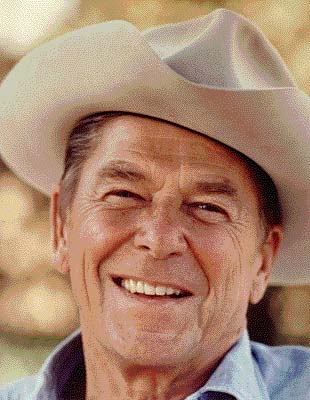 The monster that caused it all.
We can take solace in his death. May he rot in hell.
Please Rev. Fox, one more lump of coal—Please!
 That purveyor of hate, the master of religious intolerance, The Rev. TERRY FOX
has re-introduced us to the mean-spiritedness that is embodied in Charles Dickens’s famous character
Scrooge. Yes don’t let “Peace on Earth, Good will towards men” or simple words like “charity” and “kindness” be heard around Fox.
He’s way to busy attacking people who don’t share his twisted religious views. In a recent letter to The Wichita Eagle, Dec. 22, 2005, he suggests:
“Being the nice Christians that we are, we would like to recommend a special day for all the atheists. After much thought, the most appropriate day is April 1, which is known as April Fools' Day. After all, the Bible says in Psalm 14:1: "The fool hath said in his heart, There is no God."
So we non-Christians should not celebrate the holidays, according to FOX
 We should adopt April Fools’ day as our holiday, even though it was a pagan holiday before Christians took it over.

Wednesday, December 21, 2005
Have a very RED Seasons Greetings!
Have a very RED Seasons Greetings!
May a better world await us tomorrow!




May a better world await us tomorrow!




Tuesday, December 20, 2005


Sunday, December 18, 2005
Merry Winter Solstice

For those of us who are non-Christians, many of us celebrate Winter Solstice. Winter Solstice is mainly for Pagans and neo-Pagans who don’t celebrate X-mass. The Pagan counterpart, is Dec. 21.


You can still get my book for the holiday seasons

Don’t forget to buy my book before X-mass. For one last look, at a fine review, or a list of places to get the book click here.
Thursday, December 15, 2005
Another Fake election in Iraq

According to The Wichita Eagle, Dec. 15, 2005, in an editorial called “EDITORIAL: IRAQI VOTE A MAJOR STEP TOWARD DEMOCRACY,” once again the subjects of imperialist Iraq are asked to cast ballots to elect a puppet parliament. This is supposed to be a “great step forward” for Iraq’s new democracy. Of course, here at home one political party runs every branch of government and our president has stolen two elections.
It can only be hoped that Iraqis will get more out of elections that those who created them, here in the U.S.
Here in America, the voters have been bamboozled. Most of us know better than to believe the Iraqis will do any better.
Bush needed a distraction away from all the disasters he can’t control, including the war.

Kansas: still living in Bizarre-o world
For those of you outside of Kansas, Kansas Education Commissioner Bob Corkins regularly makes statements printed in The Wichita Eagle. His latest tid-bit of wisdom:
“State Board of Education member Janet Waugh raised a concern about school vouchers at Tuesday’s board meeting that many people share. She asked Corkins whether he would change his voucher proposal so that private schools would have to accept every eligible student and would have to comply with the same standards as public schools, the Lawrence Journal-World reported.”
Of course not, he answered. Many public schools wouldn’t take part if they had to do that.
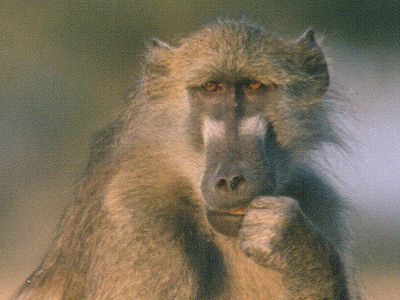
I remember when this guy wanted to hire a consultant. I suggest he check out the monkeys and apes in the zoo. They have a higher IQ than this idiot.
Vouchers? Why not just take an ax to public education?
Also, some of us are not Christian and we don’t want our children’s minds polluted with this zombie escapism.
Sunday, December 11, 2005
The Nepal civil war may soon come to an end

I received this e-mail just recently:
An "Unholy Alliance"?, Counter Punch, November 26 / 27, 2005
The Nepal Pact
By GARY LEUPP
The Communist Party of Nepal (Maoist) has in the last week signed a pact with the alliance of seven parliamentary parties that have united in opposition to King Gyanendra and his dictatorial regime. They will, in the words of former Prime Minister Girija Prasad Koirala, soon "launch a movement to end the tyrannical monarchy and hold constituent assembly elections under UN supervision." This pact ushers in a new phase in the Nepali revolutionary process.
In essence, the Maoists have agreed to lay down their arms (although not immediately) in exchange for the parties' support for a constitutional convention to replace the current one and hopefully produce a republican form of government. This doesn't sound terribly revolutionary, and indeed so solidly Establishment a figure as Kofi Annan says he "welcomes and is carefully studying" its details. The mainstream Kathmandu Post editorializes that "the Maoists have shown immense political maturity and responsibility towards the country" by concluding the agreement. The Defend Human Rights Movement-Nepal, a coalition of over two dozen leading rights groups, welcomes it.
But it must worry U.S. Ambassador James F. Moriarty, who has called the Maoist threat "terrific," and who recently said that Washington "strongly caution[s] the political parties against considering any kind of formal relationship with the Maoists, unless and until the Maoists firmly renounce violence, put down their weapons, and commit to supporting the democratic process." King Gyanendra for his part calls the pact an "unholy alliance" (maybe thinking of the Holy Alliance that gathered in support of monarchy and religion in Europe against republican ideals in 1815).
The agreement should be understood, in any case, in the context of the "Prachanda Path," or the strategic thinking of the Maoist chairman Prachanda. According to this, the Nepali revolution will combine the Chinese People's War model with the Bolshevik urban insurrection model. The latter phase may be in the offing. The People's War, initiated in 1996, has brought about 80% of the country under Maoist control, and in recent years the guerrillas have been able to paralyze the capital city of Kathmandu by bandhs (strikes) and highly effective road blockades. Over a year ago they declared that they had entered the stage of "strategic offensive"-the last stage of the war. But in September they announced a unilateral three month ceasefire, which they may extend when it expires December 2. Prachanda hasn't promised that yet, declaring, "Our party is yet to take a concrete decision whether to break the ceasefire or to extend it. The Party HQ will make a decision after considering the overall situation. . . We have done enough discussion with the parties regarding this. Therefore, even if the ceasefire is broken, it will not have any effect on the understanding."
Click here for the rest of the article.
THE ROYAL REGRESSION AND THE QUESTION OF DEMOCRATIC REPUBLIC
Baburam Bhattarai
CPN(Maoist)
In his famous work The Eighteenth Brumaire of Louis Bonaparte, Karl Marx had said: "Hegel observes somewhere that all great incidents and individuals of world history occur, as it were, twice. He forgot to add: the first time as tragedy, the second as farce." It was while drawing a parallel between the coup of 1851 by Napoleon's nephew Louis Bonaparte, who had then crowned himself as Napoleon III, and the original Napoleonic coup of 1799. Of course, this was in a satirical sense.
Similar law of Hegelian dialectics seems to be in operation in the history of Nepal, too. While the father, King Mahendra, had staged a military coup on December 16, 1960 against the first parliamentary democracy established after 1950 to centralise all power in himself, now the son, King Gyanendra, has staged another military coup on February 1, 2005 against the second parliamentary democracy restored after 1990 and centralised all state power in himself. However, for the politically enlightened ones, it is not difficult to see beneath the surface that this episode of February 1 is merely a continuation or culmination of the episode of June 1, 2001, when the relatively more weak or liberal King Birendra, along with his entire family, was butchered and a new dynasty ushered in by Gyanendra. This way, the "First February" of the Nepalese history seems to be a carbon copy of the "Eighteenth Brumaire" of the French history; but it is yet to be seen whether it will be more 'tragic' or more 'farcical'.
The Essence of the Royal Regression
In his every public utterances after the coup, including the 'royal proclamation' of February 1, Gyanendra has laboured hard to sell the theory that his present move is designed to restore 'peace' and consolidate 'multi-party democracy' by exorcising the ghost of 'terrorism' [i.e. the ongoing revolutionary People's War led by the CPN(Maoist), and this is meant only for a definite time-frame of coming three years. While talking to a group of selected media persons on February 24, he has particularly taken pains to project himself as the real Messiah of 'democracy' and the exorcist of 'terrorism' and has demanded of the parliamentary political parties and the entire members of the international community to cooperate with him in this grand venture against 'terrorism'. Thus, he has sought to project himself as the true follower of the US President George W. Bush in the international crusade against 'terrorism' and begged everybody to grant legitimacy to his autocratic military regime at least on that count. Of course, he seems to have learnt a few lessons from General Musarraf of Pakistan.
However, Gyanendra's such political gimmicks are not cutting much ice among the masses, as he has a tainted image as the hardliner autocrat even within the palace since his father's and bother's days and is particularly hated among the public as the real fratricidal and regicidal culprit in the palace massacre of June 1, 2001. Particularly after his induction of the old palace stooges of known anti-democratic persuasions like Tulsi Giri and Kirti Nidhi Bista as his principal political associates and his abduction of all fundamental and democratic rights of the people with the contrywide declaration of emergency, the essential nature of his despotic military rule has been thoroughly unmasked. Despite his incessant parroting about his commitments towards 'multi-party democracy' and 'constitutional monarchy' , all his real practices so far including the crackdown on political parties and their leaders, free media and human rights activists and blatant trampling upon the limited democratic provisions of the old constitution, leave one in no doubt that the supine parliamentary democratic system has been snuffed out and the autocratic monarchy restored in the country.
Hence the questions arise: How could the limited bourgeois democratic system established after 1990 be abolished and the autocratic monarchy restored so smoothly? Should not the wheel of history move forward rather than backward? For the correct answers to these questions, one has to grasp the laws of social development in a scientific and objective manner and to correctly evaluate the weaknesses and limitations of the chronically infirm parliamentary system after 1990.
Firstly, it should be acknowledged that struggle between social classes provides the basic motive forces of societal development. The present Nepalese society in a semi-feudal and semi-colonial stage is a multi-class society, and the principal struggle there is among the feudal, the bourgeois and the proletarian classes. All the three principle contending classes have their allies, too. The traditionally dominant feudal class has the comprador and bureaucratic bourgeoisie with it; the small and weak bourgeois class has a section of the rural and urban petty-bourgeois class with it; and the proletariat has the vast number of poor peasants and semi-proletariat with it. This basically triangular class contention is increasingly turning into a bi-polar contention after the initiation and development of revolutionary People's War under the leadership of the proletariat since 1996. In other words, according to the law of class struggle and social development , the parasitic reactionary classes are polarised on one side under the leadership of the most capable and strong class among themselves, and on the other side are rallied the working and the progressive classes under the leadership of the most advanced class, the proletariat. As the monarchy representing the feudal and comprador and bureaucratic bourgeois classes is historically the strongest representative of the reactionary classes in Nepal, the parasitic classes most adversely affected by the revolutionary People's War have been increasingly rallying under the leadership of the monarchy. This is the rationale and essence of the current royal regression or the restoration of autocratic monarchy in the social class terms. The regressive march of the reactionary classes in opposition to the progressive march of the working classes is perfectly in keeping with the dialectical law of social development.
Secondly, viewing from a further political angle, it should be acknowledged that the inherent defects and weaknesses of the bourgeois parliamentary democracy established after 1990 and the general infirmity and incapacity of the middle strata and forces also provided an objective basis for the ultimate feudal autocratic regression. Historically, the major parliamentary political forces, viz. the Nepali Congress and later the revisionist UML, enjoy no independent class base of their own, and tend to represent a hodge-podge of class forces ranging from the feudals and comprador and bureaucratic bourgeoisie to the petty-bourgeoisie and constantly take vacillating and conciliatory political positions. Contrary to this, the monarchy traditionally draws its strength from the prevailing feudal property and cultural relations, and principally, from its monopoly hold over the Royal Nepal Army (RNA). To be more specific, the political change and the Constitution of 1990 did not properly settle the question of 'state sovereignty' traditionally claimed by the monarchy and left the final 'state authority' and strategic control over the RNA in the hands of the monarchy. This 'historical blunder' (to paraphrase Jyoti Basu from India!) paved the way for the monarchy to gradually gobble up the parliament and the Constitution and consummate the current royal regression. Moreover, the parliamentary forces during their twelve years long rule in between did nothing to bring about a progressive transformation in the traditionally feudal and increasingly comprador and bureaucratic capitalist socio-economic and cultural base of the society. In the later period, particularly along with the rapid development of the revolutionary People's War, their class and political base got further eroded. As a result, the upper strata of the society which had backed the parliamentary forces after the political change of 1990 gradually returned back to the fold of the monarchy and the lower and a section of the middle strata naturally got polarized around the revolutionary People's War. This dilemma of the reformist parliamentary forces has been summed up in Chairman Com. Prachanda's recent People's War Anniversary statement thus: "Ultimately, the so-called royal proclamation of February 1 has not only exposed the irrelevance of reformism in the Nepalese politics, but also shattered the collective lethargy of the parliamentary political forces."
Thirdly, from a military point of view, this action of total centralization of the old state authority in the absolute monarchy can been as an attempt of the moribund reactionary classes to wage a final battle with the revolutionary forces in the ever mounting class war in the country. In view of the recent declaration of the CPN (Maoist) to lead the nine-year old revolutionary People's War into the final and decisive stage of strategic offensive, it is not unnatural, though foolish, for the frightened reactionary classes to attempt to wage a final battle of life and death under the direct leadership of the monarchy, which has assumed supreme commandership of the RNA since its inception. In the recent past the pathetic showing of the RNA in almost every real battle with the People's Liberation Army (PLA) has been blamed by certain quarters on the contradictions of de jure political leadership of the parliamentary forces and de facto leadership of the monarchy over the RNA, Also, it is not hard to understand the super military ambitions of Gyanendra, who has grabbed the throne by butchering the entire family of his brother, Birendra, to project himself as the great savior of his tottering feudal and comprador-bureaucratic bourgeois class. Nevertheless, as any common student of military science would know, the victory or defeat of a particular army ultimately depends more on its social class base and the political goal rather than on the leadership prowess of its commander, and in that sense the ultimate defeat of the reactionary RNA should be a foregone conclusion and Gyanendra's dream would be mere chimera.
Role of the International Forces
In the present day world of imperialist globalization any internal political event has more international ramifications than ever before. Hence the February 1 royal regression has generated worldwide reactions, and all major world and regional powers and organizations, including the UN, the USA, the UK, the EU, India, China and others have issued public statements on the question. Surprisingly none of the major international players have supported Gyanendra's regressive steps so far. Not only that the major powers like the USA, the UK, the EU and India, which have been the principal props for the reactionary regimes in Nepal in the past, have publicly opposed the current developments, and others like China, Russia, Pakistan, Bangladesh etc. have commented upon the events as 'internal affairs of Nepal'. The most significant international development has been the suspension of military aid by India and the UK (the USA also appears to be toeing the same line) and suspension of 'development aid' by a number of EU countries. International human rights organisations such as the Amnesty International, Human Rights Watch, etc., have publicly denounced the royal regime for its rampant violations of human and democratic rights of the people. Thus the autocratic royal regime has been totally isolated from the international community so far, which is a good omen for the democratic movement.
However, the despotic regime is desperately seeking to exploit two issues to gain international support for itself. The first is the 'anti-terrorism' card, and the second, the 'geo-political' card. The hackneyed 'anti-terrorism' card, much exploited after September Eleven by all and sundry petty dictators and reactionary regimes of the world, has already lost much of its original steam and is yet to be seen how it will fare in Gyanendra's case. But one can be fairly certain that the enlightened world public opinion won't be easily hoodwinked by the 'anti-terrorism' claims of a person of Gyanendra's ilk, whose hands are blood-stained in the infamous palace massacre and who has now launched a countryside reign of military terror against the people by suspending all political and fundamental rights. Nevertheless, as all the values and norms in a class-divided society are governed by class interests, it won't be surprising if some of the reactionary rulers of the world would ultimately back the regressive royal regime, overtly or covertly.
As far as the 'geo-political' card of the country's strategic positioning between the two super-states of China and India is concerned, Gyanendra's attempts to repeat the skillful diplomatic maneuvering of playing one neighbour against the other as practiced by his father, Mahendra, in the specific cold-war context of the last century cannot be expected to bear much fruit in the changed situation of international balance of forces in general and the India-China relations in particular. The recent coming together of the USA and India and their coordinated policy against royal regression may tempt Gyanendra to play the China card. He has given enough hints of this by appointing the old royalist Kirti Nidhi Bista with a known pro-China tilt as one of his principle associates in the government. Similarly, Pakistan and Bangladesh, with traditional contradictions with India, may provide some breathing space for the royal regime; some indications of which have already come from the Pakistani ambassador in Kathmandu. However, given the extremely shaky position and uncertain future of Gyanendra himself, it is hard to believe that any of the neighbours will go beyond diplomatic niceties to extend him any substantial material help. Similarly, on the part of the proletarian revolutionaries they should be prudent enough to practice strategic firmness and tactical flexibility in the matters of diplomatic relations particularly with the immediate neighbours.
Another noteworthy factor in recent days is the indication of some positive change in the attitude of major international and regional powers towards the revolutionary forces in Nepal. Due to their own distorted class outlook and interests, these major powers in the past used to regard the monarchy and the parliamentary forces as the so-called 'two pillars of stability', and they were seen working hard to bring about a grand alliance between the two against the revolutionary democratic forces. Now they seem to be increasingly veering round a 'three pillar' theory, including the revolutionary forces; which is, of course, a step forward. But the historical necessity and the new objective reality of the country is that the new 'two pillars' of parliamentary and revolutionary democratic forces join hands to uproot the outdated and rotten third 'pillar' of monarchy. The CPN(Maoist) has already made a policy decision to this effect, which is reflected in the recent Anniversary statement issued by Chairman Com. Prachanda.
The Question of Democratic Republic
After the royal regression of February 1, there are seen some important developments in the internal political situation. Whereas earlier the national politics was divided into three streams of monarchy, parliamentary democracy and revolutionary people's democracy, now it is gradually getting polarized into two broad streams of monarchy and democracy. Particularly, the leaders, cadres and supporters of parliamentary democracy have now seen through the anti-democracy maneuvering and divide-and-rule policy of the monarchy in the past and their collective ire against the monarchy has sharpened more than ever before. Though there are sponsored public rallies and statements in favour of the autocratic monarchy on a daily basis, none of the known political parties or their leaders have openly endorsed the royal move so far. While the royal regime has laboured hard to propagate that the harsh autocratic measures are directed only against the 'terrorists' (i.e. Maoist revolutionaries), the people have increasingly realized that they are against all the democratic forces. Similarly, almost all the members of 'civil society', media persons, human rights organizations, professional organizations, etc. have openly come out against the royal coup. This is obviously a good sign for the future of democracy in the country.
However, it is a matter of serious concern that even after more than a mouth since the coup the democratic forces have not been able to come up with an effective & coordinated plan, programme or mechanism of resistance against the autocratic monarchy. The CPN (Maoist) attempted to provide initial tempo to the resistance movement by organizing a three-day 'Napal Bandh' (shut-down) and a fifteen-day transportation blockade in February, and is planning further mass-mobilization and military-action programmes in coming months. The parliamentary forces did organize some propaganda activities from India and symbolic public rallies within the country, and are planning peaceful mass-arrest programmes for the future. But the desired sharp attacks against the monarchy in a unified manner, firstly, amongst the parliamentary forces and, secondly, between the parliamentary and revolutionary democratic forces, has not materialized so far. Whereas the Nepali Congress has come out more sharply against the monarchy, the so-called 'leftist' UML has made a relatively muted response against the royal coup. This has naturally raised some apprehensions among the masses whether a new 'Rayamajhi' trend (i.e. the capitulation of the then general secretary of the CPN, Keshar Jang Rayamajhi, to the monarchy in the 1960s) is in the offing. However, after so much blood-bath the situation has undergone a sea change since then. Hence, even if a few Rayamajhis from the left camp and a few Tulsi Giris from the Nepali Congress camp may arise, the overwhelming majorities of the leaders & cadres of the political parties and the general masses of the people are likely to fight till the end against the autocratic monarchy. Moreover, with the presence of the revolutionary PLA to take on the monarchist RNA, and the more favourable international situation than ever to fight against the absolute monarchy, a new objective ground is prepared for the democratic political forces to mount a unified assault against the monarchy so as to sweep it away for ever.
Precisely in this context the question of anti-monarchy common minimum programme and slogan acceptable to all the democratic forces, including the parliamentary and revolutionary democratic forces and the international community, has become pertinent. It has been the considered view of the CPN(Maoist) that the programme of election to a representative Constituent Assembly and institutionalization of the democratic republic is best suited for the purpose. The old slogan of restoration of the parliament or re-activization and amendment of 1990 Constitution, advanced by the parliamentary forces and the international community, has been totally outdated and inadequate in the new context. A brief recapitulation of the incessant struggle between the monarchy and democracy since the 1950s in the country should leave no one in doubt that without the complete abolition of the archaic institution of feudal monarchy and its puppet RNA no form of democracy can be secure and institutional in Nepal. It has been proved time and again that the so-called 'constitutional monarchy' seen in operation in some of the highly developed capitalist countries cannot be replicated in a semi-feudal & semi-colonial society. Hence any attempt on the part of the parliamentary political parties and the international forces to preserve the thoroughly rotten and discredited institution of monarchy, in this or that pretext, does not correspond with the historical necessity and ground reality of balance of forces in the country, and the agenda of 'democratic republic' has entered the Nepalese politics.
As for as the sincere commitment of the revolutionary democratic forces, who aspire to reach socialism and communism via a new democratic republic, towards a bourgeois democratic republic is concerned, the CPN(Maoist) has time and again clarified its principled position towards the historical necessity of passing through a sub-stage of democratic republic in the specificities of Nepal. Particularly, in "An Executive Summary of the Proposal Put Forward by CPN(Maoist) for the Negotiations" presented during the negotiations in April 2003 [See, Some Important Documents of Communist Party of Nepal(Maoist), 2004] the minimum content and the process of realization of this democratic republic through a Constituent Assembly has been expressed in concrete terms. The fact that the democratic republic is envisaged to be institutionalized through a freely elected Constituent Assembly, should cast away any illusions about the democratic credentials of the revolutionary forces. Further concrete issues like the creation of a new national army after the dissolution of the royal mercenary RNA can be discussed during the process of negotiations.
The need of the hour is unity of all democratic forces of the country on the common minimum programme of a democratic republic. If anything is lacking so far it is the real democratic vision and will power on the part of the leadership of major political parties. Also, it is the time to win confidence of the masses of the people through a correct projection of the democratic credentials of political parties, and for this the correct practice of inner-party democracy would be a significant component.
In the end, it may be useful to recollect Engels to understand why a proletarian party needs to uphold the programme of a bourgeois republic in the particular historical specificities of a country like present-day Nepal. Lambasting the Bukuninist anarchists who had opposed the immediate programme of a republic in nineteenth-century Spain, Engels had said:
"When the Republic was proclaimed in February 1873, the Spanish members of the Alliance [i.e. Bakuninist 'International'] found themselves in a quandary. Spain is such a backward country industrially that there can be no question there of immediate complete emancipation of the working class. Spain will first have to pass through various preliminary stages of development and remove quite a number of obstacles from its path. The Republic offered a chance of going through these stages in the shortest possible time and quickly surmounting the obstacles. But this chance be taken only if the Spanish working class played an active political role." [From "The Bakuninists at Work"]
March 15, 2005. From the CPN(M) site.
Saturday, December 10, 2005
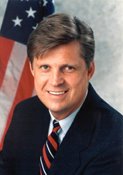
Rep. Tiahrt calls Hurricane Rita victims liars
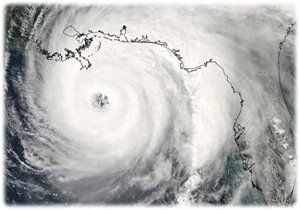
Phill Otto was vacation in Cancun Mexico when Hurricane Rita hit. As stated in The Wichita Eagle, Nov. 13, 2005, Otto gave some tips as what to do and not to do during and after a hurricane.His second tip was:
“Rely on yourself – and don’t expect help from your government. In my case, this was the only time in my life I needed direct help from my country, and it failed me. In this season of disasters it seems unbelievable that not one in our government would come to our aid.”
There were some additional comments the Eagle left out:
Monday morning was when the British consulate arrived and took information on all the British citizens in the shelter. They were informed that busses were lined up and airplanes staged to get them out as soon as the airport opened. The relief visible on their faces was evident. We had befriended a young English couple there on their honeymoon, and you could see the relief they felt as well as the confusion why the US had not arrived.
That night I heard a radio message from the US consulates office. A Mexican tourist had a radio running on batteries. The talk was all in Spanish until the Consulate came on. She stated, in English, " The US consulate from Mexico City is in Merida, assembling my team, and will visit every evacuation. center tonight and tomorrow morning". Hope renewed. The next day, no one showed up. The roads to Cancun were flooded. After 36 hours of rain I cannot believe they didn't know that. The word I got was that the roads were flooded and they couldn't make it in, so they were in Merida, encouraging Americans to get there, and they would help get us home. If they couldn't get in, I am not sure how they expected us to get out. No one got the message anyway, as we were all in shelters with no power and no communications. Then a lucky break.
One of the members of our group, Brian Hubbard, was from Washington DC, and had worked with the government in the past. He collected information from all the Americans, and was able to get in contact with the Consulates office. At that point he confirmed that if we could get to Merida, we could get help getting out. We were still on our own to get there. He encouraged us to get in touch with our families back home and have them call our Representatives and Senators to see what could be done. We were able to contact our Daughters, and had them start making calls. The results of these calls, and the lack of action by the US consulates office, and is why I say do not trust the government to help. I am not sure why we even bother to have embassies and consulates in foreign lands. I was under the assumption that if you were an American in trouble abroad these people would help. With thousands of Americans trapped, no one came to Cancun. We were told if we could get to them they would help. Now the information from home starts coming in. We were told they did not know where we were. This was not true. As I stated earlier Brian had informed the consulate’s office where we were. The British found us. As the days went on we were visited by representatives from Sun travel, Royal travel, even Expedia.com. They found us, and helped the members who traveled with them get out, some chartering flights for their people. Unfortunately ours, Travelocity, was not one of them. At no time did the US or Red Cross visit us.
Now the responses from our elected officials started coming in. My daughter contacted the offices of our Congressman, (Rep.) Todd Tiahrt (Kansas-R). She asked what was being done to help get people out over there, and she told them the British had already been in. The woman staff member who took the call told my daughter that she didn't know where we were getting that information but we were wrong, no one is over there yet and no one has been rescued, there is no way in.
Mr. Tiahrt, the information was a relay of a first hand account from one of your constituents trapped in an evacuation center. If you don't know it is wrong, don't say it is. The congressman's office was rude to my daughter, and dismissed her without offering any help. Perhaps Mr. Tiahrt has forgotten who he works for. Congressmen don't work for the political party, or the special interest groups, they work for me. -I hire them to represent me, and I can fire them. The callus attitude towards our situation placed my wife's safety at risk, and that becomes personal. She and thousands of other Americans were trapped overseas, and our government was not making any attempt to help.



Monday, December 05, 2005
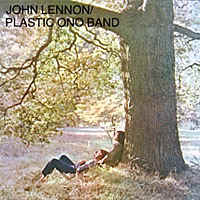
John Lennon - October 9, 1940 - December 8, 1980.
In Memory of John Lennon:
Working Class Hero
As soon as your born they make you feel small,
By giving you no time instead of it all,
Till the pain is so big you feel nothing at all,
A working class hero is something to be,
A working class hero is something to be.
They hurt you at home and they hit you at school,
They hate you if you're clever and they despise a fool,
Till you're so fucking crazy you can't follow their rules,
A working class hero is something to be,
A working class hero is something to be.
When they've tortured and scared you for twenty odd years,
Then they expect you to pick a career,
When you can't really function you're so full of fear,
A working class hero is something to be,
A working class hero is something to be.
Keep you doped with religion and sex and TV,
And you think you're so clever and classless and free,
But you're still fucking peasents as far as I can see,
A working class hero is something to be,
A working class hero is something to be.
There's room at the top they are telling you still,
But first you must learn how to smile as you kill,
If you want to be like the folks on the hill,
A working class hero is something to be.
A working class hero is something to be.
If you want to be a hero well just follow me,
If you want to be a hero well just follow me.
Working Class Hero
As soon as your born they make you feel small,
By giving you no time instead of it all,
Till the pain is so big you feel nothing at all,
A working class hero is something to be,
A working class hero is something to be.
They hurt you at home and they hit you at school,
They hate you if you're clever and they despise a fool,
Till you're so fucking crazy you can't follow their rules,
A working class hero is something to be,
A working class hero is something to be.
When they've tortured and scared you for twenty odd years,
Then they expect you to pick a career,
When you can't really function you're so full of fear,
A working class hero is something to be,
A working class hero is something to be.
Keep you doped with religion and sex and TV,
And you think you're so clever and classless and free,
But you're still fucking peasents as far as I can see,
A working class hero is something to be,
A working class hero is something to be.
There's room at the top they are telling you still,
But first you must learn how to smile as you kill,
If you want to be like the folks on the hill,
A working class hero is something to be.
A working class hero is something to be.
If you want to be a hero well just follow me,
If you want to be a hero well just follow me.
Thursday, December 01, 2005
Wal*Mart sucks!
The first rule in X-mass shopping (or Winter Solstice shopping if you’re a Pagan) is never buy anything at Wal*Mart. We could write a book on how this company rips everyone off.  Wal*Mart sucks!
There are crooked companies, but Wal*Mart is the King of corrupt and unfair practices.
 Wal*Mart sucks!
Subscribe to:
Posts (Atom)